Buying a Ring Online? The Sizing, Returns and Warranty Checklist
Online ring shopping becomes much simpler when you treat the listing as a checklist: exact fit, measurable construction, a written return policy and documents you can independently verify.
1. Confirm your US ring size before choosing a design
US ring sizes describe inside circumference, but finger size changes throughout the day. Measure at a comfortable temperature, ideally more than once, and check that the ring can pass over your knuckle without becoming loose at the base. A band wider than about 5mm often feels tighter than a thin sizer, so use a similar-width sizer whenever possible.
If you use a printable chart, print at 100% scale and verify the measurement reference with a ruler. If you already own a well-fitting ring, measure its inside diameter rather than including the metal in your measurement. Our illustrated guide explains how to find your US ring size at home without guessing from another finger.
Half sizes can make a meaningful difference, but they are not available for every design. Many top-rated jewelers include half-size options and, in some cases, custom sizing to ensure a more precise fit. Ask before ordering rather than assuming that a dropdown showing whole sizes is the limit of what the workshop can make.
2. Read the fit details, not just the size number
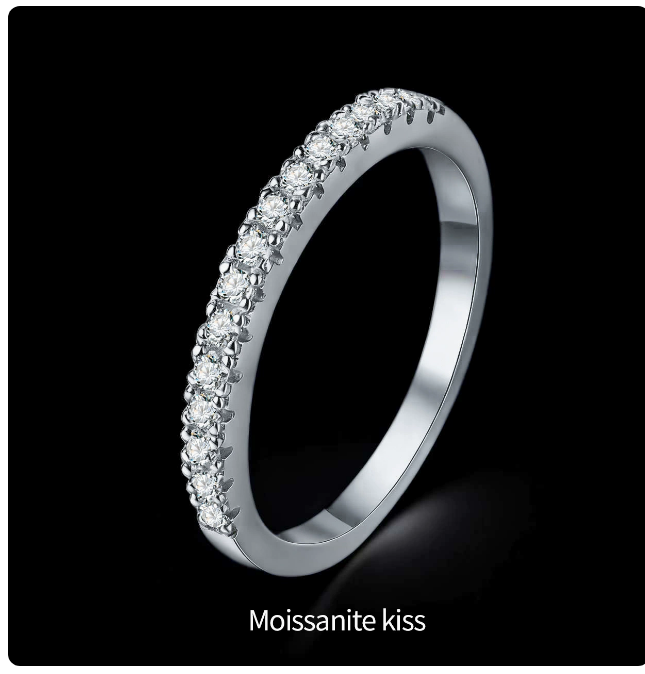
A comfort-fit interior, a wide shank and an open design all change the wearing experience. Check the band width in millimetres and the setting height, especially if you plan to wear gloves or stack the ring beside another band. For many everyday stone-set designs, 1.8–2mm is a useful width reference, although thickness and construction matter too.
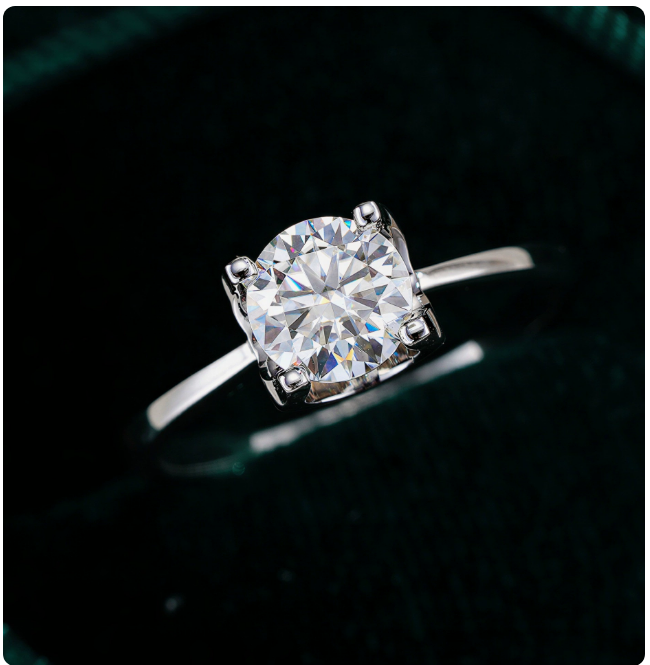
Prong security deserves the same attention as appearance. Four prongs create a minimal look; six prongs provide additional contact points for a round stone. Neither replaces regular inspection. If these details are new to you, see our guide to comfort-fit, low-profile and stackable ring design.
3. Check engraving and custom-order exclusions
Complimentary engraving can turn a ring into a personal milestone gift, but “complimentary” does not answer every practical question. Confirm the character limit, font, placement and production time. Most importantly, ask whether engraving or a custom size changes the right to return, exchange or resize the ring.
Personalised pieces are often subject to different return rules because they cannot be resold in the same way as standard stock. If you are unsure of the recipient’s size, it may be safer to confirm the fit first and add engraving later when the jeweler offers that option.
4. Separate returns, size exchanges and resizing
These three services sound similar but solve different problems:
- A return sends the item back under stated conditions for a refund or store credit.
- A size exchange replaces the ring with another size of the same design.
- Resizing physically alters the ring, usually by adjusting the shank. Stone-set and eternity designs may have limited resizing ranges.
Before buying online, check whether the brand offers free resizing or a free size exchange within 30 days, who pays shipping, and whether the countdown begins at purchase or delivery. Save the policy shown at the time of purchase and keep packaging until you know the fit is right.
NovaVibe Collective’s stated service includes 30-day returns and one free ring size exchange. That is one size exchange, not a blanket promise of unlimited physical resizing. Review the current policy and any product-specific exclusions before personalising or altering a ring, since work by another jeweler may affect eligibility.
5. Read what a lifetime warranty actually covers
A lifetime warranty is only as useful as its definitions. Manufacturing defects, normal wear, accidental damage, plating wear, lost stones and routine prong maintenance are different categories. A policy covering manufacturing does not automatically cover stone loss after an impact.
Ask whose lifetime the phrase refers to, what inspection or maintenance schedule is required, whether you pay postage and whether the original stone is covered. If stone loss matters to you, look for that phrase explicitly or consider suitable jewellery insurance. Do not treat “lifetime” as universal insurance, and do not assume every retailer offers the same coverage.
6. Verify the stone document with its issuer
A stone certificate or grading report is not the same as an appraisal, a receipt or a warranty. For a diamond over one carat, an independent GIA or IGI report is a sensible baseline. Verify the report number on the issuing laboratory’s official website and match the stated 4Cs—cut, colour, clarity and carat weight—to the stone being sold.
Moissanite is a different gemstone from diamond and may come with a different type of document, such as a GRA certificate. Do not interpret a GRA document as a GIA or IGI diamond grading report. Our guide to lab-grown stones and certification explains the distinction.
7. Compare value beyond the discount
Affordable luxury is a positioning phrase, not a material specification. A brand may offer minimalist everyday staples without traditional retail markups, but the useful comparison is still exact metal, gold thickness where applicable, stone type and size, setting construction, sizing support and return terms.
A low price is not poor value by definition, and a high compare-at price is not proof of quality. Put two listings side by side using the same specifications and service terms. The better everyday staple is the one whose cost, construction and support make sense together.
The best checkout question is not “Is it guaranteed?” It is “What exactly is guaranteed, for how long, and what could make me ineligible?”
Your copy-and-send pre-purchase message
If any detail is missing, send the seller this short list:
- Is this ring available in my US half size, and does the band run wide or narrow?
- What are the band width, setting height, exact base metal and stone type?
- Will engraving or custom sizing affect the 30-day return or exchange terms?
- Is sizing help provided as a physical resize or as a replacement ring?
- What does the warranty exclude, and is stone loss covered?
- Can the stone report be verified directly with its issuing organisation?
A clear, written answer is part of the product. It gives you something more reliable than urgency, a countdown timer or an unqualified promise at checkout.
Questions we get about this
Should I order a half size up for a wide ring?+
Can an engraved ring be returned?+
Does a lifetime warranty cover a lost centre stone?+
Wear it, then decide.
Every piece ships with 30-day returns and one free ring size exchange. If it does not feel right, send it back — no explanation needed.
Explore the collection