Lab-Grown Diamonds and Moissanite: Conflict-Free Stones, Certificates and Real Value
“Lab-grown” describes where a stone was formed, not whether it is real. The more important question is which gemstone you are buying, what its document actually verifies and whether the price makes sense without an investment story.
Lab-grown diamond and moissanite are not the same stone
A lab-grown diamond is diamond: crystalline carbon created in a laboratory rather than underground. It is chemically identical to a mined diamond and has the same fundamental hardness and optical properties. Specialist laboratory equipment can distinguish its growth origin.
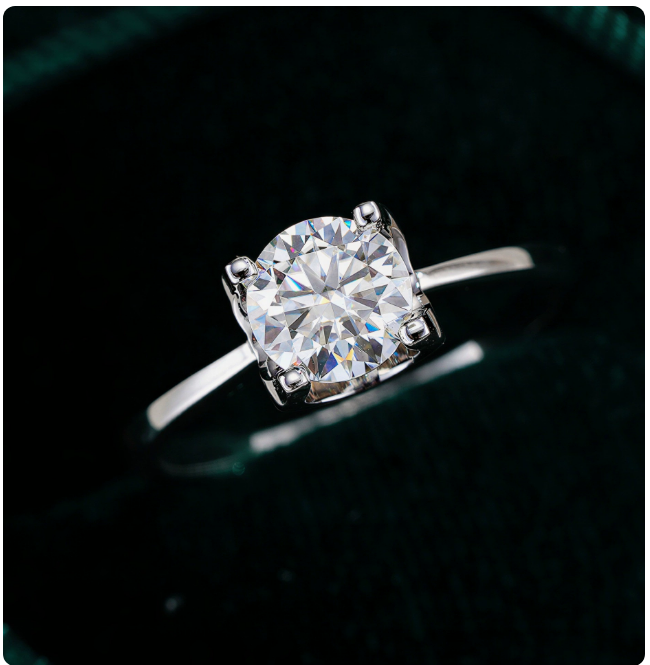
You can often get a larger, conflict-free centre stone within the same budget by choosing a lab-grown diamond, which is chemically identical to a mined one. “Often” matters: size still interacts with cut, colour, clarity and market pricing, and the lower purchase price should not be mistaken for a promise of future resale value.
Moissanite is silicon carbide, a distinct gemstone. It is not a fake diamond and should not be sold as one. It measures about 9.25 on the Mohs hardness scale compared with diamond’s 10, and it typically shows stronger rainbow flashes, often called fire. Choosing between them is a choice of appearance, budget and preference—not a choice between “real” and “fake.” For a broader visual comparison, read our existing guide to moissanite versus diamond.
Conflict-free and ethically sourced need evidence
Conflict-free is commonly used to say a stone has not financed armed conflict, but the meaning and verification behind the phrase vary. The Kimberley Process addresses a particular definition of conflict involving rough mined diamonds; it is not a complete environmental or labour audit. A mined stone described as conflict-free is not automatically proven to meet every ethical standard.
Lab-grown stones avoid the mining step, which removes one set of concerns. They still require energy, equipment, labour and transport. If ethical sourcing matters to you, ask about production location, energy sources, labour standards and supplier traceability rather than treating laboratory origin as an all-encompassing certification.
Ethically sourced is therefore a claim to unpack, not a gemstone species. Useful evidence names the supplier or standard and explains its scope. Recycled metal can address another part of the ring’s footprint, but it does not document how the stone was made.
How to read GIA and IGI diamond reports
The 4Cs are cut, colour, clarity and carat weight. Carat is weight, not a direct measurement of visible diameter; cut proportions influence how well a stone handles light; and colour and clarity grades describe specific laboratory assessments under controlled conditions.
For diamonds over one carat, verify that the stone comes with an independent GIA or IGI grading report appropriate to its mined or laboratory-grown origin. Use the issuing laboratory’s official report-check tool, match the report number and measurements, and check any laser inscription where present. A generic PDF or a shop-created “certificate of authenticity” is not the same evidence.
A report grades a stone; it does not grade the ring’s workmanship, guarantee a fair price or insure the jewellery. Those require separate checks.
What a GRA moissanite certificate means
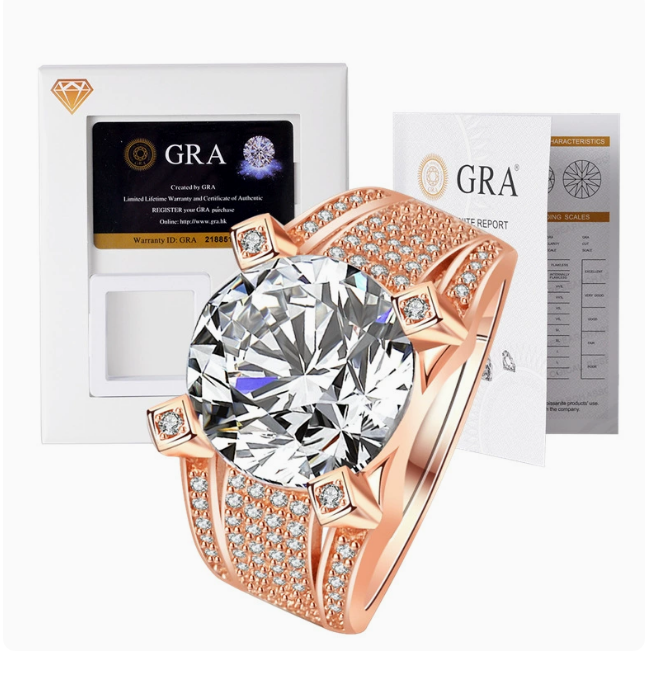
Moissanite may be supplied with a GRA certificate identifying the stone and stating specifications. GRA is not GIA, and the document should not be represented as an independent GIA or IGI diamond grading report. GIA diamond reports are for diamonds; moissanite is a different gem material.
Ask who issued the document, which characteristics it records and how its serial number connects to the exact stone. Then assess the ring using visible product details: stone dimensions, cut, colour description, setting style and magnified images where available. A certificate is one part of that review, not a substitute for it.
NovaVibe Collective identifies its moissanite as moissanite and references GRA-certified stones in relevant product specifications. We do not describe moissanite as a lab-grown diamond or present GRA documentation as GIA/IGI diamond grading.
Affordable luxury is a comparison, not a certificate
A brand may position itself as affordable luxury, delivering minimalist everyday staples without traditional retail markups. That can be a useful description of its business model, but only specifications make two products comparable.
Compare the same stone species, dimensions and documented qualities; the same base metal and coating thickness; and the same setting style and service terms. Also decide whether you are buying for daily enjoyment or expecting a financial return. Neither lab-grown diamond nor moissanite should be sold to you with an assumption that it will appreciate.
The real value of an everyday ring can be straightforward: a look you love, a setting you can wear comfortably, transparent documents and support if the size is wrong. That is a stronger basis for value than a crossed-out retail price alone.
Handcrafted and small-batch: ask which work is done by hand
Handcrafted, hand-finished and hand-set describe different amounts of human work. A ring can be cast using modern equipment and then have its stone set and surfaces finished by hand. Small-batch may allow closer attention to individual pieces, but it is not an independent quality grade.
When shopping from an independent jeweler, look for evidence of the details: even prongs, a smooth interior, clean polishing around the setting and clear answers about repairs. “Each piece is handcrafted in small batches” is most meaningful when the maker explains the actual process and stands behind inspection and aftercare.
The clearest stone description answers three separate questions: what is it, who documented it, and what evidence supports the sourcing claim?
A buyer’s five-point verification
- Species: diamond, lab-grown diamond or moissanite should be named explicitly.
- Document: verify GIA or IGI diamond reports with the issuer; read GRA moissanite documentation as a different category.
- Measurements: match carat weight where applicable and stone dimensions to the actual listing.
- Sourcing: ask what conflict-free, ethical or recycled claims cover and who verifies them.
- Workmanship: inspect the setting and ask about sizing, repairs and return terms.
Once those answers are clear, you can compare beauty and budget on equal terms. For the service side of the purchase, use our online ring buying checklist before checkout.
Questions we get about this
Are lab-grown diamonds real diamonds?+
Is a GRA certificate the same as a GIA or IGI report?+
Does lab-grown automatically mean ethically sourced?+
Wear it, then decide.
Every piece ships with 30-day returns and one free ring size exchange. If it does not feel right, send it back — no explanation needed.
Explore the collection