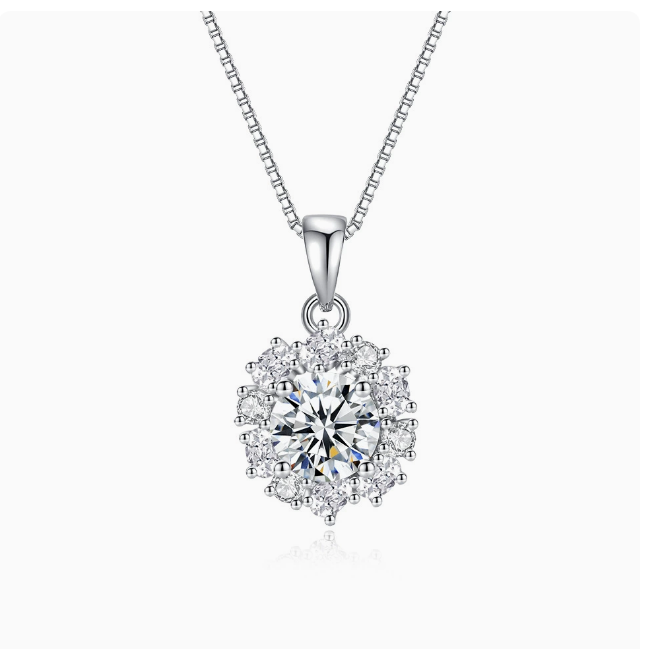
Moissanite Pendant Sizes: 0.5, 1, 2 and 5 Carats on the Neck
Two pendants can carry the same carat weight and look completely different, because a stone on a chain has no ring band beside it for scale. Here is how moissanite actually reads at each size, and why one carat ends up being the default for most people.
Carat is weight, not size
Carat measures mass. Diameter is what your eye sees. For round stones the two move together predictably, so carat is still a useful shorthand — as long as you know the millimetres behind it.
- 0.5 carat: roughly 5 mm across. Reads as a small, deliberate detail.
- 1 carat: roughly 6.5 mm across. The most common pendant size, and the one most people picture when they imagine a single-stone necklace.
- 2 carats: roughly 8 mm across. Clearly a statement, still wearable every day.
- 5 carats: roughly 11 mm across. An event piece. On a pendant this size, the setting and chain have to be built for the weight.
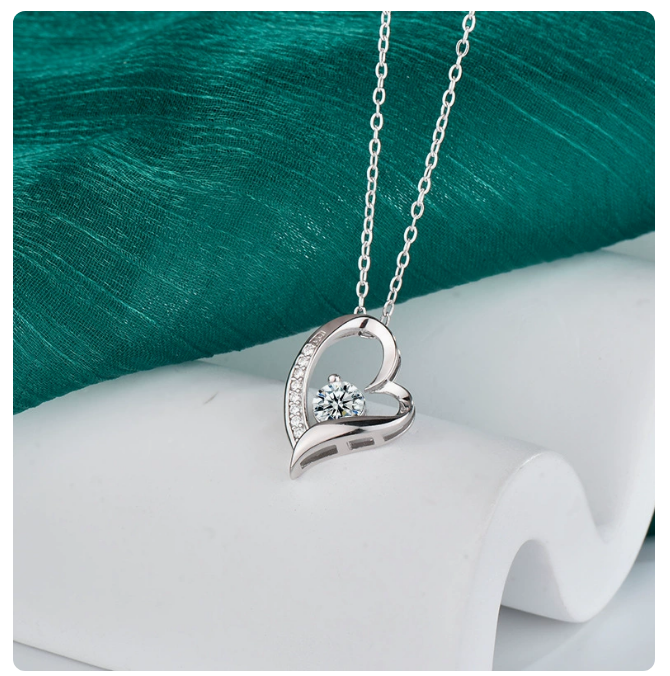
These are approximate diameters for round brilliant cuts. Fancy shapes such as pear, oval or heart spread their weight differently, so a 1 carat heart and a 1 carat round do not look the same on the neck.
Why a pendant looks smaller than a ring
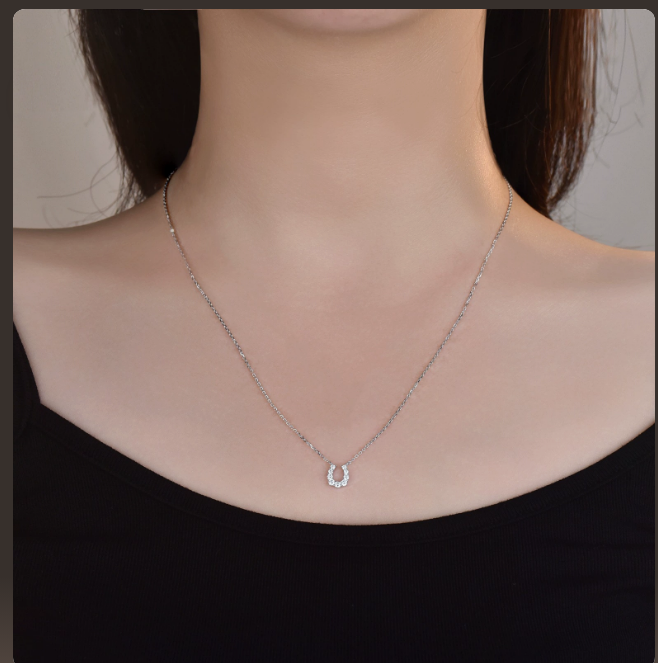
A ring is framed. The stone sits between two fingers of known width, surrounded by a band, and the eye has a reference. A pendant has none of that: it hangs in open space against the neck, and the body behind it is a much larger surface than a hand.
The practical result is that the stone you find impressive in a ring will feel modest as a pendant. If you are moving a size you already like from finger to neck, go up rather than down.
Why one carat is the default
At roughly 6.5 mm, a one carat pendant is large enough to be seen from conversation distance and quiet enough to wear with a t-shirt. It sits at collarbone height without pulling the chain, and it does not catch on scarves or seatbelts the way a larger stone can.
Our pendants are built around this size for that reason. At $119 to $139, a one carat moissanite pendant sits in the range where it can be worn daily rather than kept in a box — which is the point of owning it.
When to go bigger
Go to two carats if the necklace is the main piece in an outfit: a plain neckline, an evening, a photograph you will keep. Go beyond that only if you genuinely want the pendant to be the first thing people notice.
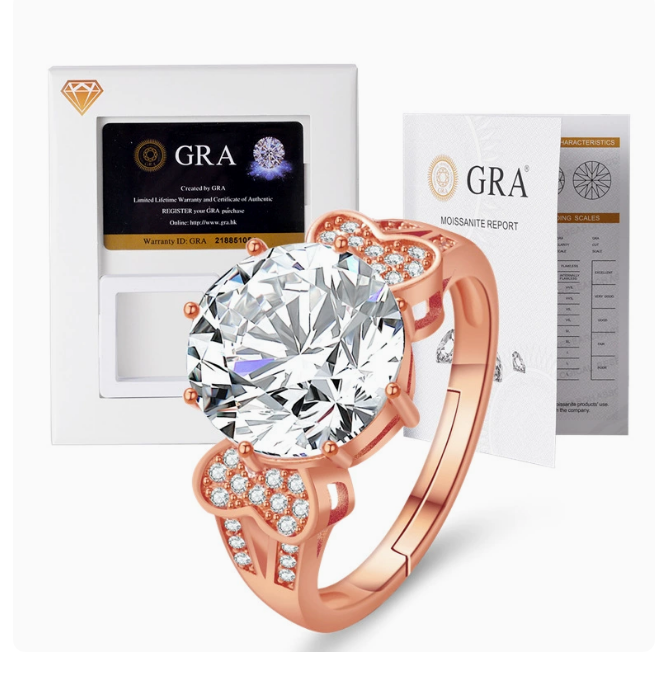
If you want a genuinely large stone for the look of it, a ring is often the better carrier — the setting supports more weight and the hand gives the eye a frame. Our largest pieces are five carat rings, which read as dramatic on a hand without the chain problem a large pendant creates.
Setting and chain matter as much as size
A bezel setting wraps the stone and makes it read slightly smaller but more protected. A prong setting exposes more of the stone and maximises the sparkle, at the cost of edges that can catch on knitwear. Chain thickness matters too: a very fine chain under a large pendant looks unbalanced.
Moissanite has more coloured fire than a white-only stone, and that intensity is easiest to see when the stone is not crowded by a heavy setting. On a pendant, a simple setting usually shows the stone at its best.
Choosing between sizes
If you are buying your first pendant, one carat. If you already own a one carat and want more presence, two. If you are buying for an occasion and the necklace is the outfit, judge it against the neckline you will wear rather than the number on the page.
Questions we get about this
How big is a 1 carat moissanite pendant in millimetres?+
Does a pendant look smaller than the same stone in a ring?+
Is 1 carat too small for a pendant?+
Wear it, then decide.
Every piece ships with 30-day returns and one free ring size exchange. If it does not feel right, send it back — no explanation needed.
Explore the collection