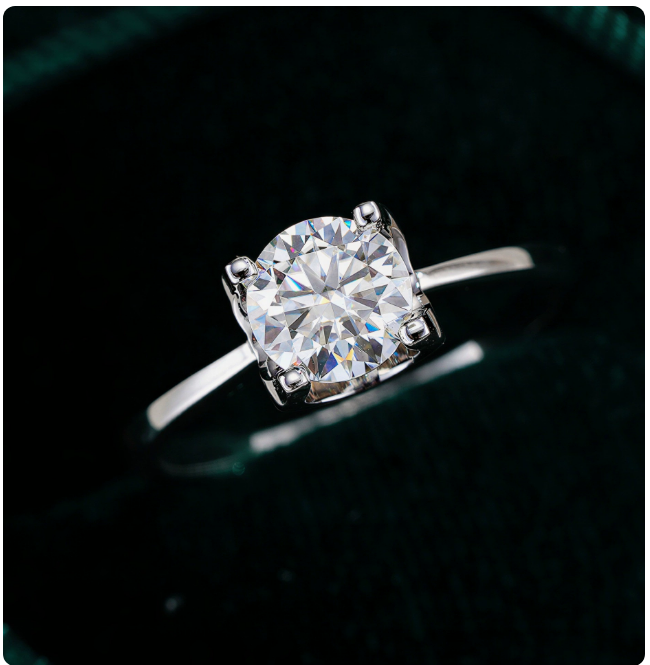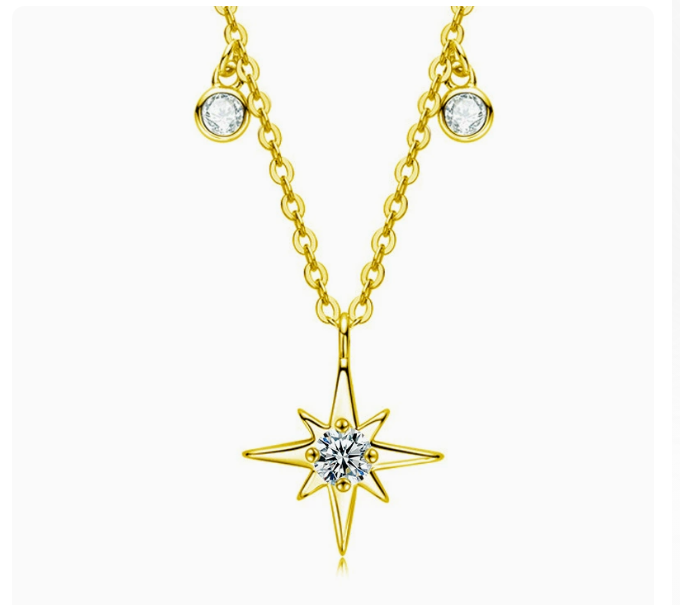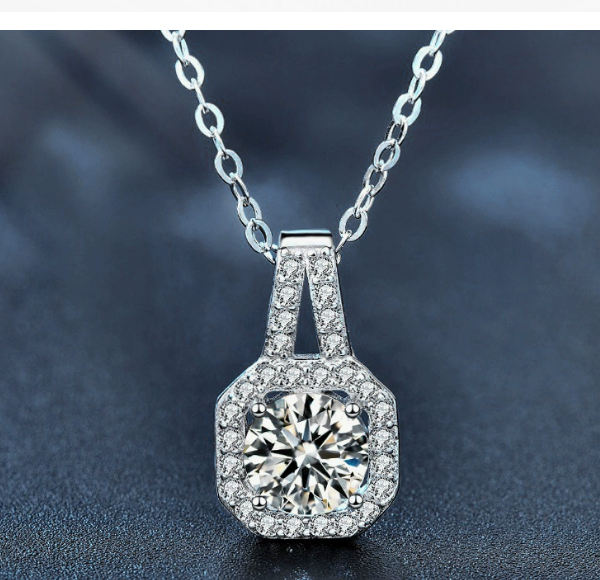
Moissanite vs Lab Diamond: What's the Difference (And Why It Matters)
Five years ago, the only "alternative to diamond" you saw on Instagram was moissanite. Today every lab diamond brand ships directly to your door. So — what is actually different, and does it matter?
First, the honest truth: the naked eye cannot reliably tell them apart. Most jewellers use a thermal probe. The difference is real, but it is in the chemistry, the price and the way each stone reads on your finger.
The Side-by-Side
- Chemical makeup. Moissanite = silicon carbide (SiC). Lab diamond = carbon, grown under high pressure high temperature (HPHT) or chemical vapor deposition (CVD). Same mineral as natural diamond, atom for atom.
- Mohs hardness. Moissanite 9.25, lab diamond 10. Both are harder than sapphire (9), ruby (9), emerald (7.5) and opal (5.5–6). Both are perfectly suited for everyday ring wear.
- Fire (dispersion). Moissanite 0.104, lab diamond 0.044. Moissanite has 2.4× more rainbow flashes. This is the reason people describe moissanite as "more alive" — the fire is more visible in everyday indoor light.
- Brilliance. Both are excellent. Moissanite RI (2.64–2.69) is slightly higher than diamond RI (2.417–2.419), so reflections are slightly brighter.
- Price. Moissanite is typically 60–75% cheaper than lab diamond of the same carat and color/clarity grade. A D-color VVS1 2 ct moissanite is roughly $1,400. The equivalent lab diamond is $4,000–$5,500.
Certification Matters Differently
Lab diamonds are graded on the traditional 4Cs (color, clarity, cut, carat) by IGI, GIA and other labs. The grading system is standardized and universally understood — every jeweller on the planet can read an IGI certificate.
Moissanite is graded by the Gemological Research Association (GRA) using a similar but not identical standard. Our stones are GRA-certified D-color (colorless) and SI1–VVS2 clarity, with certificates you keep. The GRA standard is newer and less familiar than IGI/GIA — but the stones themselves are precisely graded.
When to Choose Which
Choose moissanite if:
- You want maximum fire for the money.
- A 3 ct stone matters more to you than a 2 ct lab diamond.
- You want something ethically sourced without the price premium.
- The 4C grading system does not matter to you.
Choose lab diamond if:
- The 4C grading system matters to you or to the person you are gifting.
- You want a stone that looks and reads exactly like a natural diamond.
- You are buying specifically for someone who might one day want to have it appraised.
We sell moissanite because we believe in it. It has more fire, it is cheaper, it is less known, and it is the stone we would buy ourselves. But we also recognize that lab diamond has its place — and if your decision comes down to 4C certification, that is a legitimate reason.
Questions we get about this
Can a jeweller tell moissanite from lab diamond?+
Which is better for engagement rings?+
Do both have warranty and returns?+
Wear it, then decide.
Every piece ships with 30-day returns and one free ring size exchange. If it does not feel right, send it back — no explanation needed.
Explore the collection